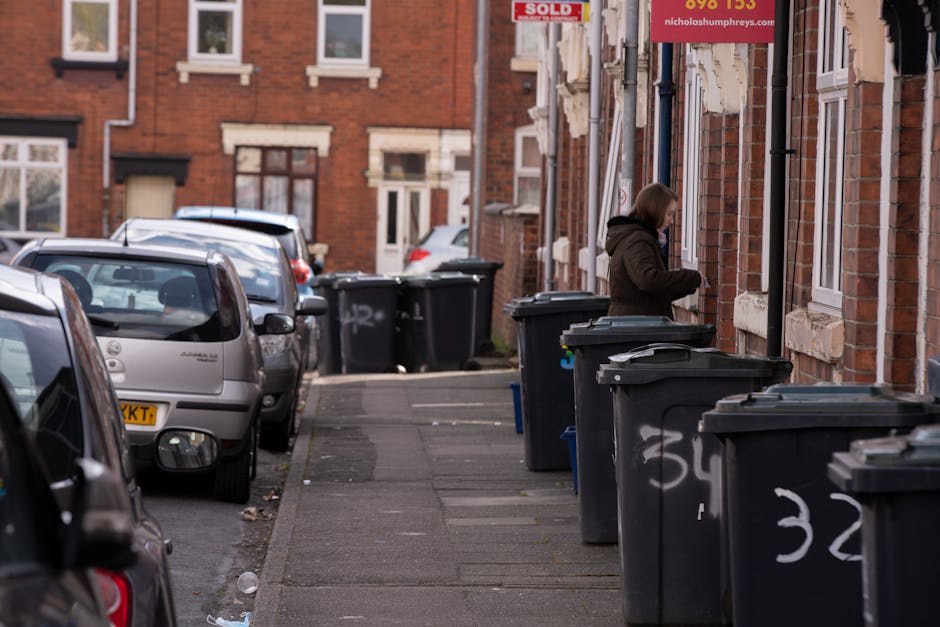
Powis Street rubbish clearance guide for tight access jobs

If you're trying to clear rubbish on Powis Street and the access feels awkward, narrow, or just plain fiddly, you're not alone. Tight access jobs can turn a simple clearance into a small logistical puzzle: stairs that pinch at the landing, a shared hallway with bikes and prams, a rear alley that's barely shoulder-width, or a flat above a busy shop where every minute counts. This Powis Street rubbish clearance guide for tight access jobs is designed to help you plan it properly, avoid the usual headaches, and get the job done with less stress.
There's a big difference between "a bit of waste to move" and "waste in a place nobody can easily reach." The second one needs more thought, better sequencing, and a team that understands how to work cleanly and carefully. Below you'll find a practical guide to what matters, how the process works, what to avoid, and which options make sense when space is limited and the clock is ticking.
Why Powis Street rubbish clearance guide for tight access jobs Matters
Powis Street is the kind of place where access can change from one property to the next. One doorway might be straightforward, while the next involves a narrow stairwell, internal turns, limited parking, or a shared entrance that must stay clear for neighbours, customers, or deliveries. That matters because rubbish clearance is not only about taking items away; it's about removing them safely without damaging walls, floors, door frames, lifts, or someone's day.
When access is tight, the margin for error gets smaller. A bulky sofa that would be easy on an open driveway can become awkward when you must rotate it through a compact hallway. Bagged waste that looks manageable in a room can become a nuisance if there's only one narrow route out. And if a job sits on a busy street, timing and coordination matter as much as muscle. Let's face it, nobody wants a clearance crew standing around in the way while a pile of junk blocks the only sensible exit.
It also matters because poor planning can increase cost, extend the time on site, and create avoidable risk. You may need more labour, more careful lifting, extra protection for surfaces, or a different disposal method altogether. A clear plan helps you choose the right approach the first time instead of improvising halfway through.
Expert summary: Tight access rubbish clearance works best when the route, waste type, lifting plan, and timing are checked before anything is moved. Good planning usually saves more time than rushing ever could.
If the job involves mixed rubbish, bulky household items, builder's debris, or office clear-out waste, it may help to look at related support pages such as waste removal, builders waste clearance, or office clearance depending on the setting. The right route is rarely the same for every property, and that's fine.
How Powis Street rubbish clearance guide for tight access jobs Works
A tight access clearance is usually a two-part job: assess first, remove second. That order sounds obvious, but it's the bit people skip when they're eager to get rid of the mess. In practice, the process starts with understanding what needs to go, where it is, and how it can be moved out without forcing anything through a space that is too small for comfort.
The most useful first step is a short access check. This usually covers door widths, stair turns, ceiling height on landings, the number of internal steps, outside parking space, and whether the waste can be carried straight to a vehicle or needs to be staged in smaller loads. A ground-floor room with a narrow rear passage is a very different challenge from a second-floor flat with a tight communal staircase. Same waste. Different job. Very different feel on the day.
Good crews also think about protection. If the route is cramped, it may be sensible to use floor protection, corner guards, blankets, or extra hands to guide awkward items through turns. For example, a fridge, wardrobe, or heavy cabinet may need to be tilted, rotated, and carried by two people rather than dragged. You know the sound - that awful scrape on paintwork - and nobody wants that.
Timing can matter too. If the street is busier at certain times, a clearance may be easier early in the day or during a quieter window. Some jobs are simple enough to complete in one sweep; others work better in stages, especially when there are mixed materials or lots of loose rubbish that needs bagging before removal.
For some households and businesses, an alternative service may be more practical than a skip. In a tight-access setting, a skip can be blocked by parking limitations, loading issues, or simply the fact that waste has to be carried a long way. If you're weighing up the options, the page on what can go in a skip is a useful reference point for understanding what sort of material is commonly accepted in skip-style disposal, even if a man-and-van approach ends up being easier for your location.
Key Benefits and Practical Advantages
Tight access clearance is not just a workaround. Done properly, it can be the cleanest and least disruptive way to clear rubbish from a difficult property. The biggest benefit is control: the waste is removed in a way that suits the layout rather than forcing the layout to suit the waste.
- Less risk of damage: Careful handling reduces scuffs, chips, and broken fixtures.
- Better time management: A planned route and load order usually speed things up, even in awkward spaces.
- Less disruption to neighbours or customers: This matters on a street like Powis Street where entrances and walkways can be shared or busy.
- More suitable for bulky items: Sofas, mattresses, appliances, and fitted office furniture can all be managed more safely with the right approach.
- Flexible removal volume: You are not locked into a one-size-fits-all solution.
- Cleaner finish: Loose waste, dust, and leftover fragments can be collected as part of the same visit.
There's also a less obvious advantage: confidence. When access is tricky, people often leave jobs half done because they worry they've chosen the wrong method. A properly assessed clearance takes that guesswork out. You get a plan, a route, and a practical way forward. Nice and simple, really. Or as simple as a cramped staircase ever gets.
For more context on item-specific disposal, you may find it helpful to review furniture clearance, mattress and sofa disposal, or fridge and appliance removal. Those services are often part of the same type of access challenge, just with different handling needs.
Who This Is For and When It Makes Sense
This guide is for anyone dealing with rubbish removal where access is not generous. That includes flat owners, landlords, tenants at the end of a lease, shop managers, office staff, builders, and anyone clearing a property with a narrow route out. It also applies to people who can technically move the waste themselves but would rather not spend a weekend wrestling a broken desk down a tight stairwell. Fair enough, too.
You'll usually benefit from a tight access clearance if any of the following sound familiar:
- There is no driveway or easy loading space outside.
- The only exit is through a narrow hallway, stairwell, or side passage.
- The property is above ground level and stairs are steep or awkward.
- Items are bulky, heavy, or difficult to dismantle on site.
- The waste is mixed, so it needs sorting before removal.
- You need the area cleared quickly with minimal disruption.
It also makes sense when the waste includes more than general household rubbish. Builders' rubble, old office desks, filing cabinets, worn-out furniture, or garden debris all behave differently in a tight space. If the job crosses into business premises, business waste removal can be a better fit. If it's a home or rented flat, house clearance or flat clearance may suit the situation better.
Sometimes the job looks simple on paper and messy in real life. A couple of chairs, some bags, an old mattress, and a broken appliance can become awkward when the route out is tight and every item needs a different grip. That's when experience starts to matter.
Step-by-Step Guidance
Here's a practical way to approach a Powis Street rubbish clearance job where access is limited. It's not glamorous, but it works.
- Identify exactly what needs removing. Separate general rubbish, bulky items, recyclable material, and anything that may require special handling.
- Measure the route. Check doors, stair turns, and any low ceilings or tight corners. A few centimetres can make a real difference.
- Clear the path before moving anything. Take away trip hazards, loose cables, mats, and anything that could snag on the way out.
- Decide whether items can be dismantled. Flat-pack furniture, wardrobes, bed frames, and shelving often move more easily when broken down first.
- Plan the loading order. Put the easiest items near the exit or bag waste in a way that avoids backtracking.
- Protect the property. Use blankets or corner guards where turns are tight and surfaces are vulnerable.
- Move the waste in manageable stages. Short, careful carries are usually better than forcing large items through a difficult route.
- Sort and dispose responsibly. Recyclable material, reusable items, and waste requiring specialist handling should be separated if possible.
If the job involves a loft or storage space, remember that access is often even more awkward than it first appears. A loft clearance can involve stepladders, low beams, and bags that have to be lowered carefully rather than thrown down. For that kind of job, loft clearance is worth considering as a dedicated service rather than treating it as a quick add-on.
One small but useful habit: take a photo of the space before the work starts. Not for drama, just for clarity. It helps keep the route plan honest, especially when a hallway looks wider in memory than it does in daylight.
Expert Tips for Better Results
In our experience, the difference between a smooth job and a messy one often comes down to small decisions made early. Here are the things that usually help most.
- Keep the access route as short as possible. If you can move items to a staging point near the exit, do it.
- Remove loose rubbish before bulky items. Bags, small boxes, and broken bits clear the route and make turns easier.
- Use the right number of people. One extra pair of hands can reduce strain and improve control on narrow stairs.
- Ask about protection measures. If a corridor is painted, carpeted, or newly fitted, surface protection is worth it.
- Be honest about weight. A full bin bag may seem harmless until you're halfway down the stairs and regretting everything. We've all seen that look.
- Separate special items early. Appliances, confidential paperwork, and anything potentially hazardous should not be mixed in with general rubbish.
Another tip that helps more than people expect: keep neighbours in the loop if the route passes shared areas. A simple heads-up can prevent awkwardness when a landing or passage needs to stay clear for ten or fifteen minutes.
And if the clearance is part of a wider property refresh, it can be smarter to combine it with related work. For example, an end-of-tenancy job might involve furniture, rubbish, and a few leftover household items all at once. In that case, pages such as home clearance and furniture disposal can help frame what needs to go and how best to group it.
Common Mistakes to Avoid
The mistakes on tight access jobs are often simple ones, which is exactly why they happen. People assume the space is "probably fine" and only discover the issue when the item is already halfway turned and stuck. Not ideal.
- Not checking measurements first: Guessing the route is usually how problems start.
- Leaving the waste unsorted: Mixed waste slows everything down and can create extra handling.
- Trying to move everything in one go: This can damage surfaces and increase injury risk.
- Ignoring parking or loading constraints: If the vehicle cannot get close enough, the job becomes slower and harder.
- Forgetting about awkward items: Mattresses, fridges, wardrobes, and sofas all deserve their own plan.
- Skipping surface protection: A small mark on a wall is still a mark on a wall.
Another common one: assuming "rubbish" means all of it can be handled in exactly the same way. It doesn't. Some items may need specialist disposal, and some may need to be kept separate for recycling or safety reasons. If there's any doubt, the cautious approach is usually the right one.
For example, a clearance involving an old fridge is not the same as clearing cardboard and broken furniture. The handling, loading, and disposal routes are different, which is why services like fridge and appliance removal exist as a separate option.
Tools, Resources and Recommendations
You don't need a warehouse full of kit to manage a tight access job well, but a few sensible tools make a real difference. The best kit is the stuff that prevents chaos before it starts.
| Tool or resource | Why it helps | Best used for |
|---|---|---|
| Measuring tape | Confirms door widths, turns, and item dimensions | Route checks and item planning |
| Heavy-duty sacks | Helps keep loose waste controlled and movable | Bagged rubbish and mixed small waste |
| Protective blankets or pads | Reduces scuffs in narrow hallways | Furniture and appliance removal |
| Gloves and sturdy footwear | Improves grip and reduces minor injury risk | General clearance work |
| Basic dismantling tools | Lets you break down large items before moving them | Wardrobes, bed frames, shelving |
When you are choosing a clearance option, it helps to compare the type of waste, the size of the access route, and the amount of work involved. If the job is mostly loose waste, a general waste removal service may be enough. If it is mostly old furnishings, look at furniture clearance or mattress and sofa disposal. If you are clearing work areas, office clearance may be more relevant than a general domestic option.
Sometimes the smartest recommendation is not a bigger vehicle or more labour, but simply a more precise plan. It sounds dull. It is dull. And yet it saves the day surprisingly often.
Law, Compliance, Standards, or Best Practice
For rubbish clearance in the UK, the safe approach is to treat waste with care from start to finish. That includes correct handling, sensible segregation, and making sure anything that needs specialist treatment is not dumped into a general load. If you are a business, the responsibility tends to be even clearer: you need to ensure your waste is handled by a competent provider and kept traceable where required.
Best practice also means thinking about health and safety on site. Tight access raises the chance of slips, trips, strains, and accidental damage. Good methods usually include clear communication, suitable footwear, safe lifting, and enough people for the items being moved. That is especially true where stairs, narrow corridors, or shared entrances are involved.
Some materials need extra caution. Electrical items, fridges, old paint, sharp fragments, and anything that may be classed as hazardous should be separated and handled appropriately. If your clearance includes anything uncertain, it is better to pause and check than to guess. The service page for hazardous waste disposal is a useful reminder that not all waste belongs in the same pile.
For readers who want reassurance about standards and company practices, pages such as health and safety policy, insurance and safety, and recycling and sustainability give a good sense of the sort of care and responsibility that should sit behind a professional service.
Options, Methods, or Comparison Table
If you are deciding how to deal with a difficult-access rubbish job, the main options usually come down to doing it yourself, hiring a skip, or arranging a man-and-van style clearance. Each has a place. The trick is matching the method to the site.
| Method | Best for | Limitations | Good fit for tight access? |
|---|---|---|---|
| DIY removal | Small volumes, lightweight waste, simple routes | Time-consuming, physically demanding, risk of damage | Sometimes, but only for very small jobs |
| Skip hire | Bulk waste where there is easy outside space | Needs room outside, may not suit narrow streets or awkward access | Often less suitable where access is tight |
| Professional clearance team | Bulky items, mixed waste, fast turnaround, awkward routes | Needs good briefing and clear expectations | Usually the strongest option for tricky access |
For many Powis Street properties, the third option is the one that makes most sense because it adapts to the site instead of relying on ideal parking or open frontage. That said, if you already know the job is just a small pile of light waste, DIY may still be reasonable. No need to overcomplicate a bag or two.
Where business premises are involved, it can be useful to compare with business waste removal. Where the job is more domestic and item-led, house clearance or flat clearance can provide a more realistic framework.
Case Study or Real-World Example
A typical tight access job on Powis Street might involve a first-floor flat above a commercial unit, with a narrow internal staircase and limited waiting space outside. The property could contain a broken sofa, a mattress, several bin bags of mixed household waste, and a dismantled desk from a recent move. Nothing outrageous on its own. Together, though, it becomes a proper access job.
In a case like that, the most efficient approach is usually to start with a quick route check, identify which items need dismantling, and load the loose waste first so the main route stays clear. The sofa and mattress would then be moved carefully, one at a time, with attention to corners and landing space. If the weather is damp, even more care is needed because stairs and thresholds can become slippery faster than people expect. One wet shoe and suddenly everyone's a bit more polite, a bit more careful.
What tends to make the difference is not brute force but sequencing. The job feels smaller when each item has a plan. The team stays calmer, the property stays safer, and the customer is not left wondering whether the hallway is about to suffer for the sake of a clear-out.
That same thinking applies to storage spaces, garden sheds, garages, and small workrooms. If the waste is mostly overflow clutter or old equipment, related services like garage clearance and garden clearance can be a better fit than treating the job as generic rubbish.
Practical Checklist
Use this checklist before the clearance begins. It keeps everyone honest and usually saves at least one awkward moment.
- Measure doors, hallways, stairs, and any turns that look tight.
- Confirm what items are going and what is staying.
- Separate anything fragile, sharp, valuable, or sensitive.
- Check for bulky items that may need dismantling.
- Clear the route of mats, cables, loose objects, and trip hazards.
- Think about parking and how close the vehicle can reasonably get.
- Decide whether floor or wall protection is needed.
- Identify anything that needs specialist handling, such as appliances or hazardous waste.
- Set a sensible time window if the street or building is busy.
- Keep a contact number handy in case any access issue changes on the day.
Quick takeaway: tight access jobs go smoother when the path, the load, and the order of work are decided before the first item moves. That really is the whole game.
If you're arranging a larger or more varied job, you can also review the company information pages on about us, pricing and quotes, and book online to understand how a professional service is typically structured. For any unusual or sensitive waste, confidential shredding is worth considering where paperwork or records are involved.
Conclusion
A Powis Street rubbish clearance guide for tight access jobs comes down to one simple idea: the property layout shapes the clearance plan, not the other way round. If the route is narrow, shared, busy, or awkward, then planning, protection, and item-by-item handling matter more than speed alone. Done well, the job feels controlled and surprisingly straightforward. Done badly, it turns into a long afternoon of shuffling, lifting, and muttering under your breath.
So measure first, sort the waste properly, be realistic about the access, and choose the method that fits the space. That's how you avoid damage, reduce disruption, and make the whole thing feel manageable instead of chaotic. And honestly, that peace of mind is often the best result of all.
Get a free quote today and see how much you can save.
For anyone dealing with a difficult clear-out on Powis Street, the next sensible step is simply to map the route, identify the awkward items, and get the job sized properly before lifting begins. A little preparation goes a long way, and it usually makes the day feel much lighter.
Frequently Asked Questions
What counts as a tight access rubbish clearance?
It's any clearance where the route out is awkward, narrow, or restricted. That might mean small doorways, steep stairs, a shared corridor, a rear alley, or limited space outside for loading. If the waste can't move easily, it's a tight access job.
Can bulky furniture be removed through narrow stairwells?
Often, yes, but it depends on the item and the route. Sofas, wardrobes, and mattresses may need to be turned, tilted, or dismantled before removal. If the turns are too tight, dismantling is usually safer than forcing the item through.
Is a skip always the best option for Powis Street jobs?
Not always. Skips are useful when there is room outside and easy loading access, but they can be awkward in streets with limited parking or tight frontage. In many cases, a clearance team can be the more practical choice.
Do I need to sort rubbish before the clearance starts?
Yes, as much as possible. Sorting helps with lifting, loading, recycling, and special handling. Loose mixed waste slows everything down, especially when space is already tight.
What should I do if I have a fridge or washing machine to remove?
Appliances should be handled carefully because they are heavy, awkward, and sometimes need specialist disposal. It's best to treat them separately rather than bundling them in with general rubbish.
How long does a tight access clearance usually take?
That depends on the volume, the route, and whether items need dismantling. A small job may be quick, while a larger flat or office clearance can take much longer. Access is often the thing that changes timing most.
Will the clearance team protect walls and floors?
They should use sensible care, and many jobs benefit from extra protection in narrow spaces. If the route is especially tight or the property is newly decorated, it's worth asking what protection measures are planned.
What happens if there is limited parking outside?
Limited parking can slow a job down because waste has to be carried farther. A good plan will take this into account so the team knows how to stage the removal and how much time to allow.
Can confidential paperwork be cleared with the rest of the rubbish?
It's better to keep paperwork separate and use a dedicated confidential shredding service where needed. That helps protect privacy and avoids sensitive documents being mixed into general waste.
What if I'm not sure whether my waste is hazardous?
If you're unsure, don't guess. Some items need separate handling, and it's safer to check first. Hazardous waste should not be treated like general rubbish, even if it looks small or harmless.
Is this kind of clearance suitable for landlords and letting agents?
Yes. It's especially useful at the end of tenancies, after abandoned clear-outs, or when a property needs to be made ready quickly. Tight access is common in flats and shared buildings, so the method is often just as important as the waste itself.
How do I prepare a property before the team arrives?
Clear the route, identify the items to be removed, and move anything fragile or personal out of the way. If possible, separate bulky items from small rubbish so the team can start efficiently. A few minutes of prep can save a lot of hassle.
What if I need help with a whole property, not just one room?
Then a broader clearance service may be more suitable. Depending on the situation, home clearance, house clearance, or even office clearance may be the right fit. The best option depends on what's being removed and how the property is accessed.